
Why Steam Activation Plants Specify Coconut Shell Charcoal as Premium Feedstock
An engineering breakdown of how mature South Indian and Indonesian coconut shell charcoal yields world-class activated carbon with 1200 mg/g iodine and 98% mechanical hardness.

Mawai Engineering Unit
Manufacturing Specialists
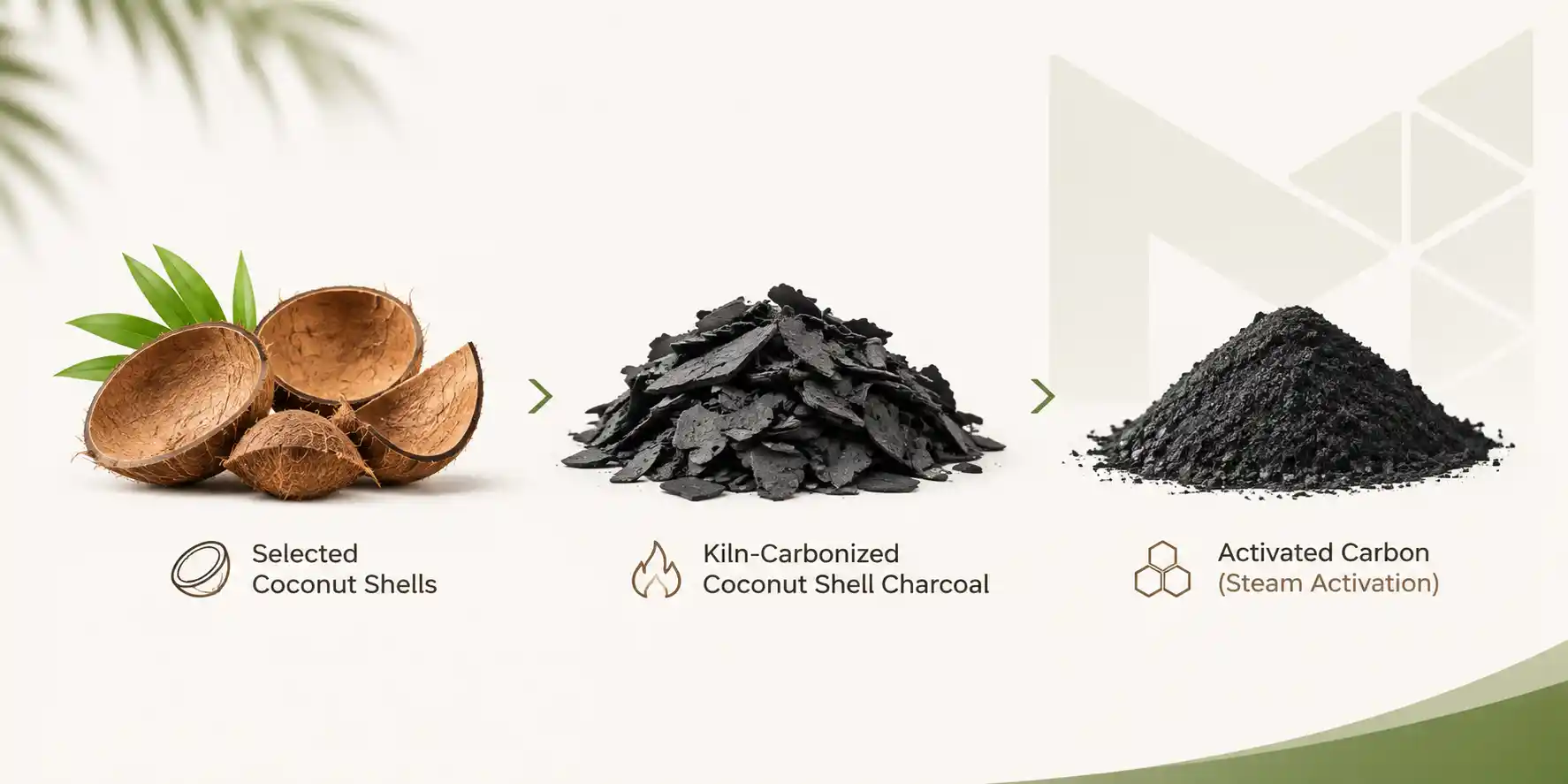 Visual Documentation // Industrial Manufacturing
The Primary Raw Material for High-Performance Activated Carbon
Activated carbon manufacturers face an ongoing operational challenge: selecting a raw material feedstock that maximizes activation furnace yield, minimizes particulate attrition, and develops the tight micropore distribution required for critical industrial filtration.
Across global activation plants in Europe, the Americas, and Asia, coconut shell charcoal is unanimously specified as the highest-grade raw material feedstock, outperforming bituminous coal, lignite, and wood.
1. Naturally Developed Microporous Matrix
The biology of mature coconut shells (endocarp) is composed of tightly packed, highly lignified sclerenchyma cells. When carbonized in controlled processing facilities, this dense organic structure converts into a carbon skeleton dominated by micropores (pore diameters under 2 nanometers).
Unlike coal—which forms irregular macro- and mesopores that struggle to capture small volatile molecules—coconut-based carbon provides an enormous internal surface area (exceeding 1,000 $m^2/g$). This makes it exceptionally efficient at capturing low-molecular-weight organic compounds, chlorine, pesticides, and trace contaminants.
2. High Mechanical Hardness (> 98%) Prevents Breakage
During high-temperature steam activation (800°C to 1000°C) inside rotary activation furnaces, raw charcoal is subjected to continuous tumbling, thermal stress, and gas erosion. Weak or soft raw charcoals break down into fine carbon powder, resulting in heavy product loss and low usable granular yields.
- Mawai Coconut Shell Charcoal features exceptional hardness, ensuring that when converted into granular activated carbon (GAC), it maintains an ASTM D3802 ball-pan hardness rating of minimum 98%.
- This extreme resistance to crushing ensures long service life during backwashing, hydraulic column loading, and high-pressure liquid filtration.
3. Rigorous Quality Parameters for Feedstock Export
At Mawai Carbon Industries, every container shipment of coconut shell charcoal dispatched to activation factories is tested against strict quality standards:
- Fixed Carbon: 75% to 80% (ensures high carbon yield in activation furnaces)
- Ash Content: Controlled below 3.0% (minimizes inorganic dust and leachate)
- Moisture Content: Kept strictly below 8.0% (avoids shipping excess water weight and saves furnace pre-drying energy)
- Volatile Matter: 12% to 15% (indicates thorough, uniform carbonization)
- Calorific Output: 7,000+ kcal/kg
Mawai Quality & Compliance Verified
Data verified against ASTM international testing standards and production batch analysis.
Related Technical Publications
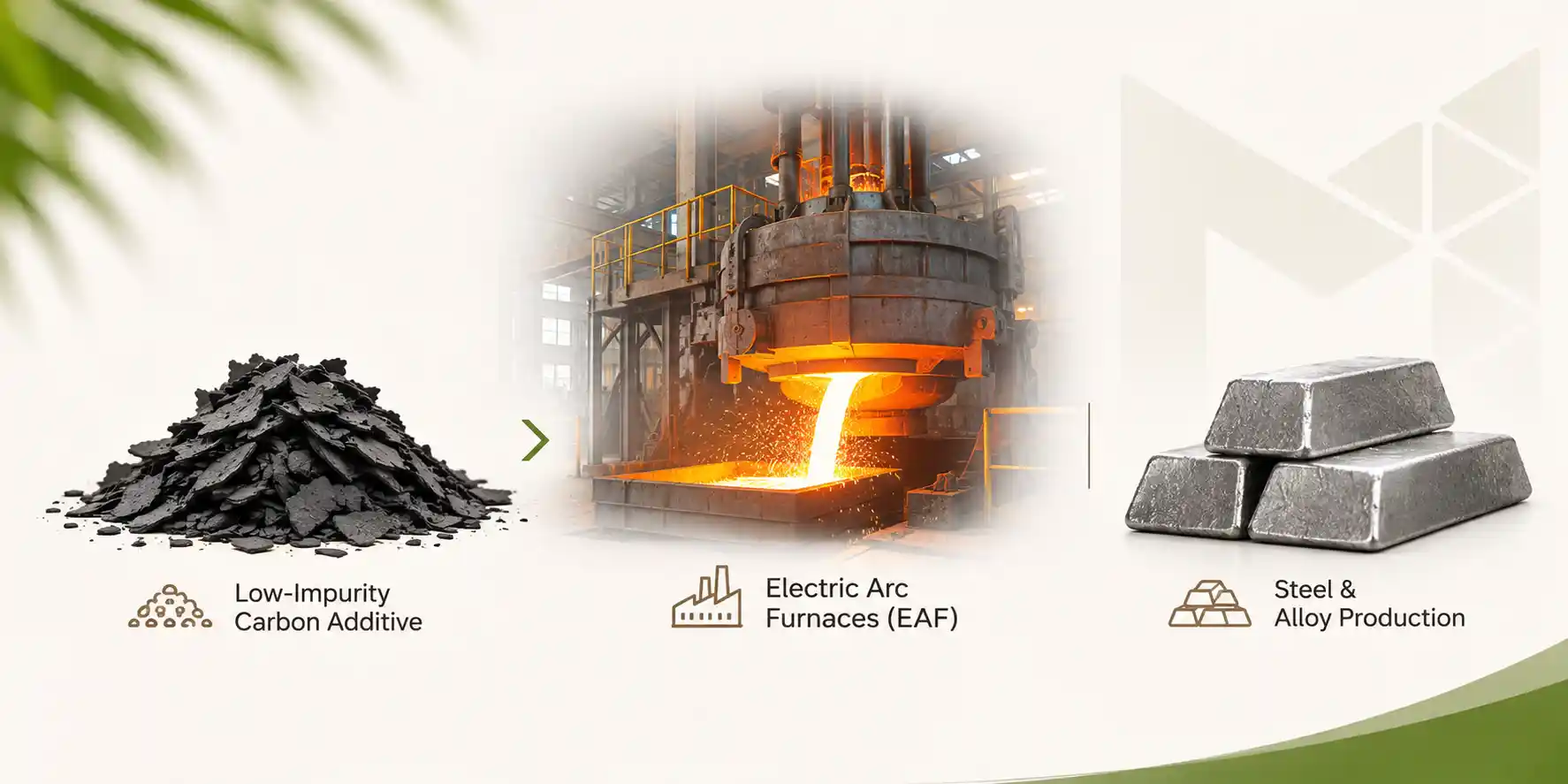
High Fixed Carbon Coconut Charcoal in Metallurgy & Steel Foundries: The Low-Impurity Recarburizer
Discover why electric arc furnace (EAF) operators and ductile iron foundries are replacing fossil coke with high-purity coconut shell charcoal to eliminate sulfur contamination and slag defects.
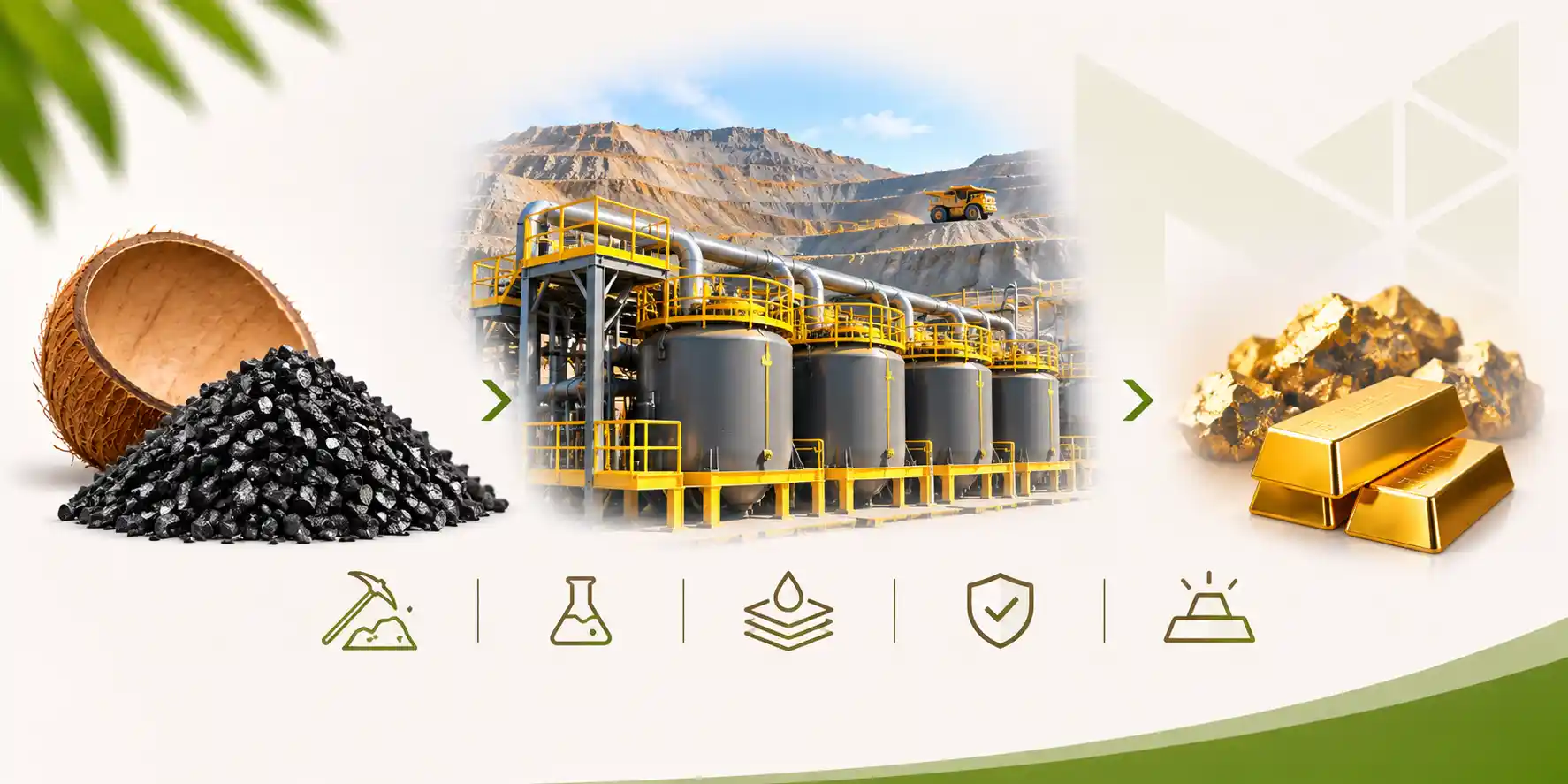
Optimizing Gold Recovery: Why Coconut Shell GAC Outperforms in CIP & CIL Circuits
Learn why precious metal mining engineers rely on high-hardness coconut granular activated carbon to maximize gold loading rates ($K$-value) and eliminate gold loss in tailings.
Looking For A Direct Coconut Shell Charcoal Manufacturer?
Partner with Mawai Carbon Industries for reliable container-load supply of premium coconut shell charcoal, fine carbon powder, and industrial activated carbon grades delivered worldwide.