What Is Coconut Shell Charcoal?

An all-natural, clean-burning solid carbon fuel made exclusively from the dense shells of mature coconuts—carbonized under controlled conditions to deliver sustained high heat, extreme physical hardness, and zero forest deforestation.

What is Coconut Shell Charcoal - Mawai Carbon Industries
01 / Natural Raw Material

Zero Deforestation Upcycling

Unlike ordinary charcoal made by cutting down forest trees, coconut charcoal uses only the discarded hard shells of mature coconuts harvested for food and oil. Millions of shells are collected from farming communities, creating a renewable closed-loop resource that keeps agricultural waste out of landfills.

02 / Controlled Carbonization

Smokeless & Chemical-Free

Dried shells are carbonized inside specialized processing facilities under precisely restricted oxygen levels. Because mature coconut shells contain no toxic wood sap or resin, the resulting charcoal burns completely odorless and smokeless, producing only a tiny trace of natural white ash.

03 / Cellular Toughness

Microscopic Pore Structure

Mature shells possess a naturally dense, compact cellular structure. When carbonized, they deliver high fixed carbon and high mechanical resistance against crushing. This tight micropore network makes coconut shell charcoal the world's most sought-after feedstock for steam activation factories.

Mawai Carbon Industries • Factory Supply
02 // Applications

Uses of Coconut Shell Charcoal

Because of its exceptional density, clean burning nature, and lack of smoke, coconut shell charcoal is used in a wide variety of commercial and industrial applications.

Application 01 // Primary Feedstock01 / 05

Activated Carbon Manufacturing
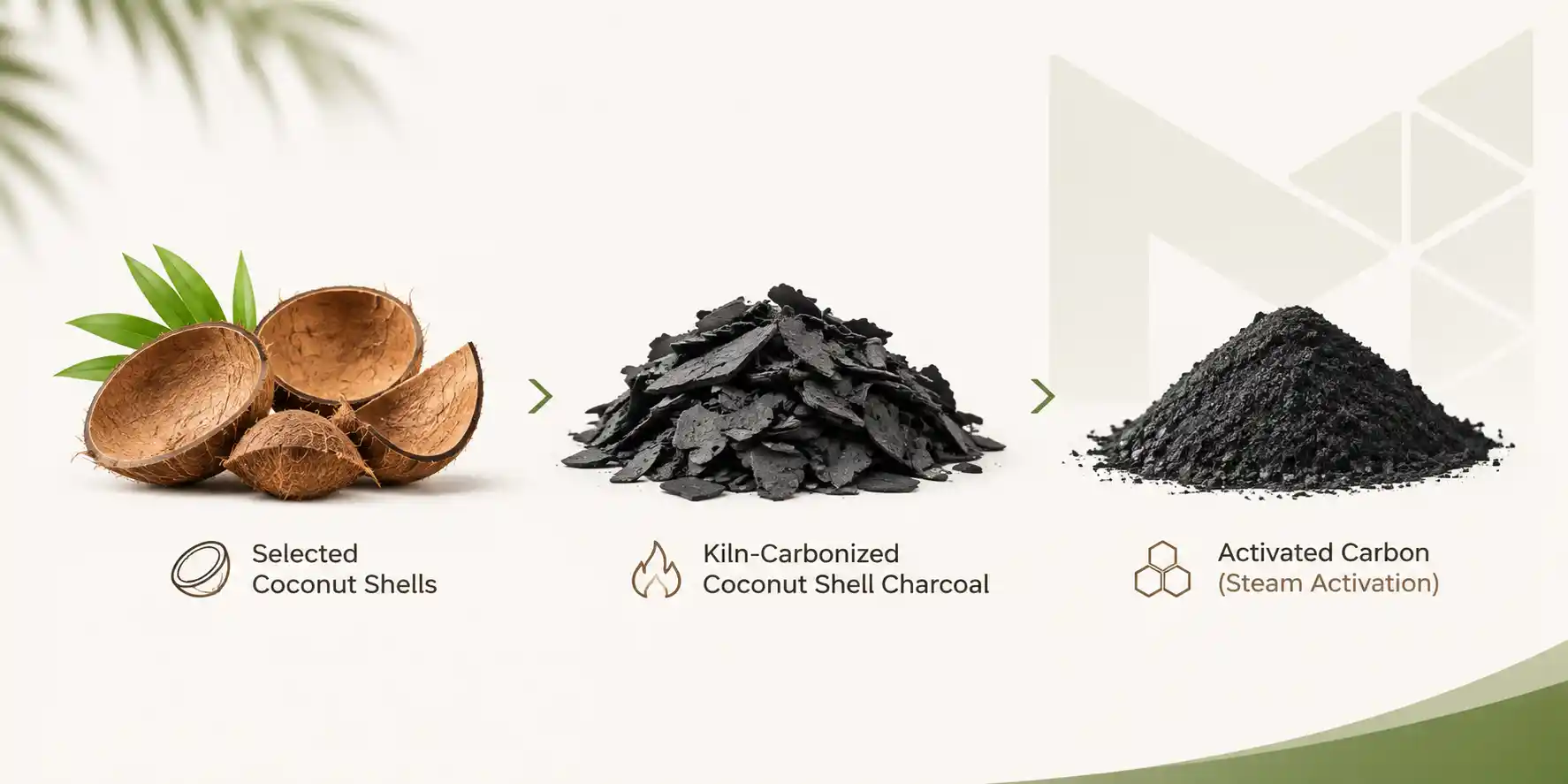
Activated Carbon Manufacturing from Coconut Shell Charcoal

The premier raw material feedstock for steam activation plants worldwide. Mature coconut shells possess naturally developed micropores and high mechanical hardness that no other biomass can match.

When activated with high-temperature steam, it creates millions of microscopic adsorption traps perfect for municipal drinking water filtration, gold mining recovery, and air purification. Its natural toughness prevents the charcoal from breaking into fine dust during steam activation, giving manufacturers significantly higher output yields.

Primary Feedstock • Steam Activation • High Yield
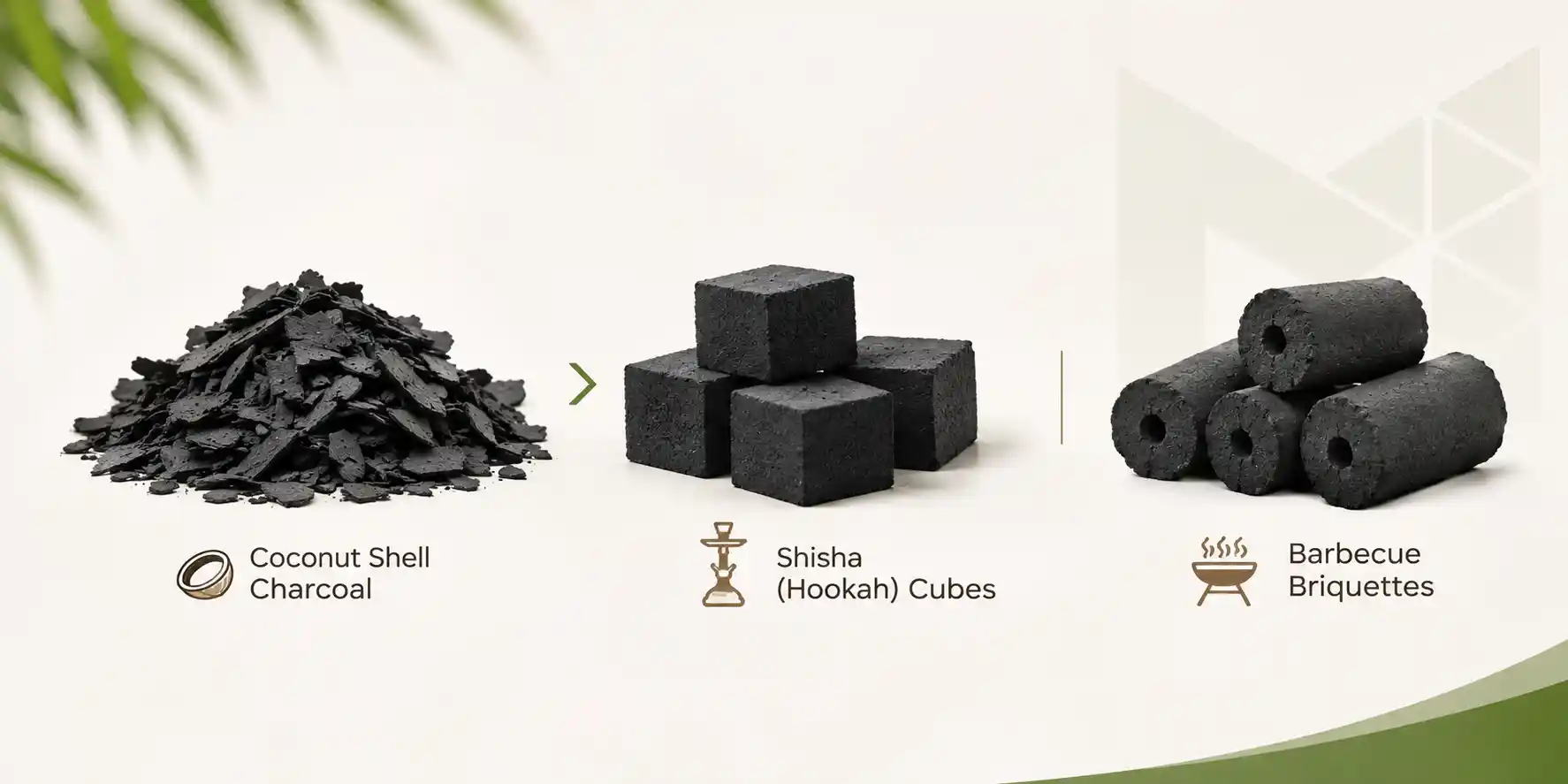
Application 02 // Hookah & Barbecue02 / 05

Briquette & Shisha Production

Briquette and Shisha Production with Coconut Shell Charcoal

The globally preferred solid base for manufacturing premium shisha cubes and commercial barbecue briquettes. It burns 2 to 3 times longer than wood charcoal with sustained, even heat.

Because mature coconut shells contain no toxic wood sap or chemical resins, the briquettes burn completely odorless and smokeless. Food retains its natural flavor without any bitter chemical aftertaste, and the charcoal leaves behind only a tiny amount of natural white-gray ash that is clean and easy to dispose of.

Long Burn Time • 100% Smokeless • Food Clean
Application 03 // Foundry & Metallurgy03 / 05

Metallurgy & Steel Foundries

Metallurgy and Steel Production Carbon Additive

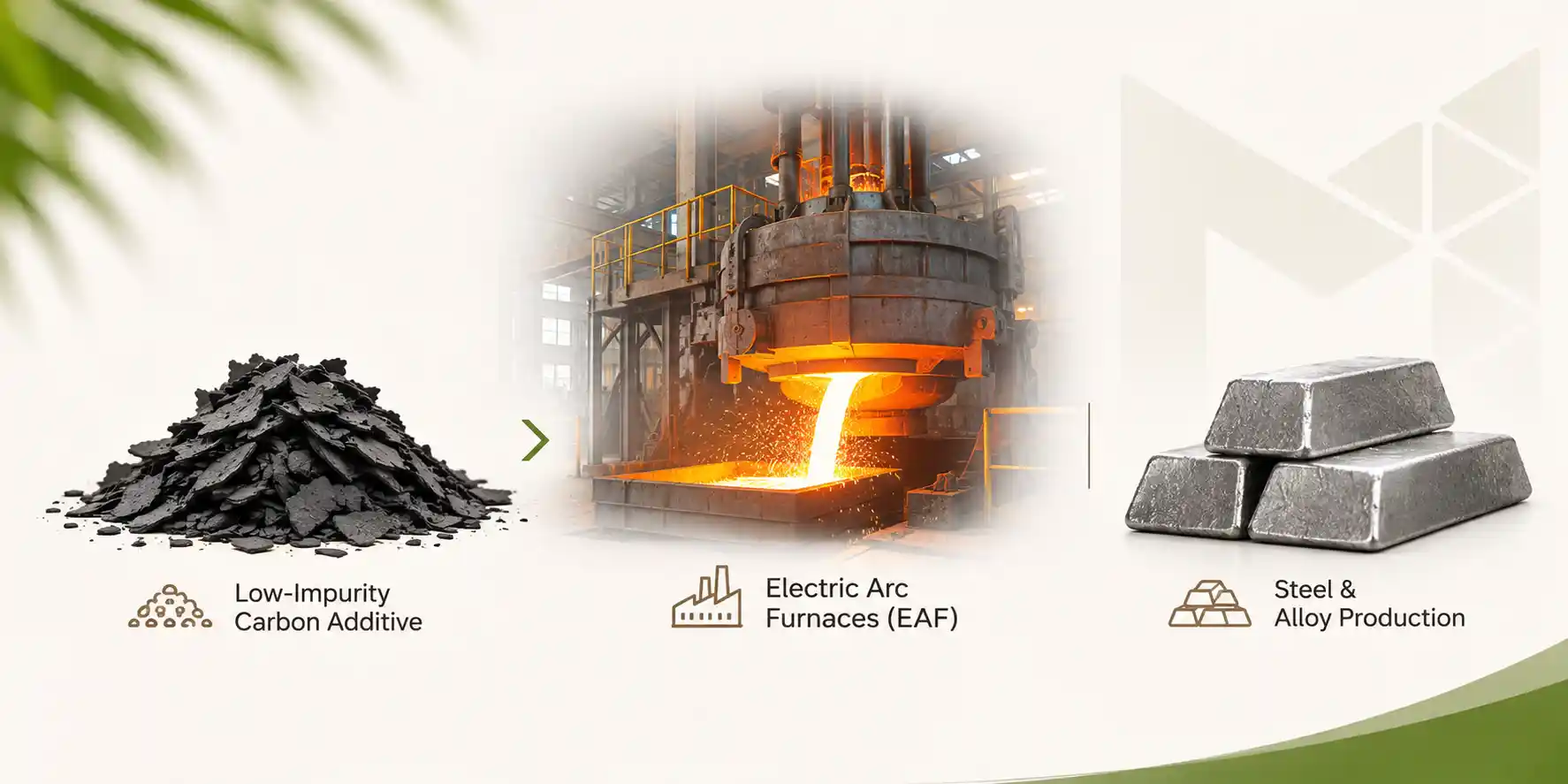
A high-purity carbon additive and deoxidizer widely utilized in metal casting, electric arc furnaces, and specialty alloy steel production.

Foundries require carbon raisers with ultra-low sulfur and minimal phosphorus to prevent metal brittleness and structural defects. Coconut shell charcoal provides exceptionally clean carbon that dissolves smoothly into molten metal pools, ensuring superior alloy strength and clean slag separation during casting.

Carbon Raiser • Low Sulfur • Clean Slag Formation
Application 04 // Biochar Medium04 / 05

Agriculture & Soil Regeneration

Agricultural Biochar for Soil Health and Moisture

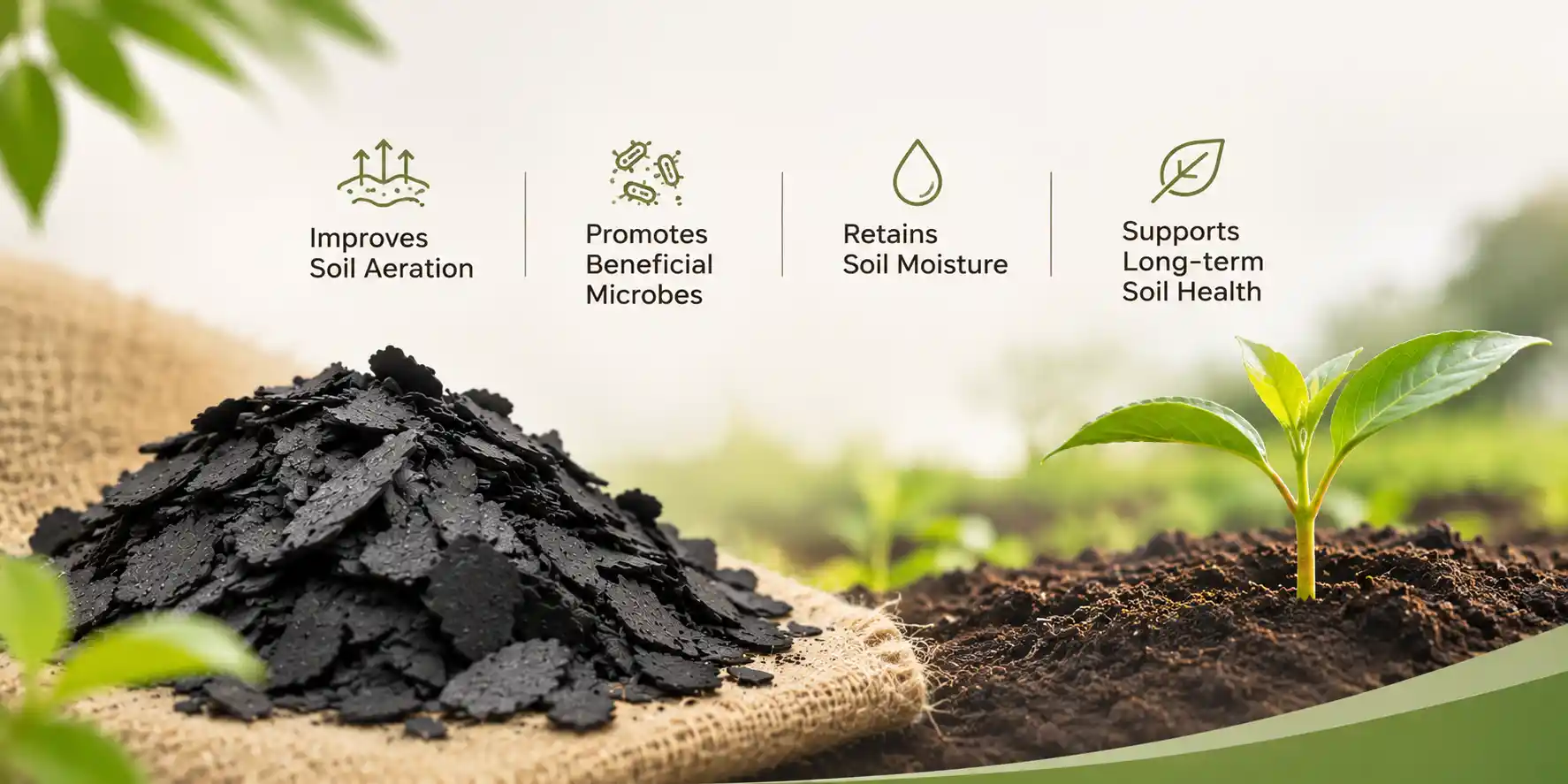
A permanent, highly porous biochar soil enricher that restores biological health, retains moisture, and stops nutrient runoff on commercial farms.

When tilled into farming soil, the porous carbon matrix acts like a microscopic sponge. It locks in rainfall and liquid fertilizers around plant root zones, reducing irrigation needs during hot dry spells. It also shelters beneficial soil microbes, revitalizing depleted soils for seasons to come.

Moisture Retention • Nutrient Sponge • Soil Health
Application 05 // Industrial Compounds05 / 05

Chemical & Carbon Compounding

Chemical and Carbon Compounding with Coconut Shell Carbon

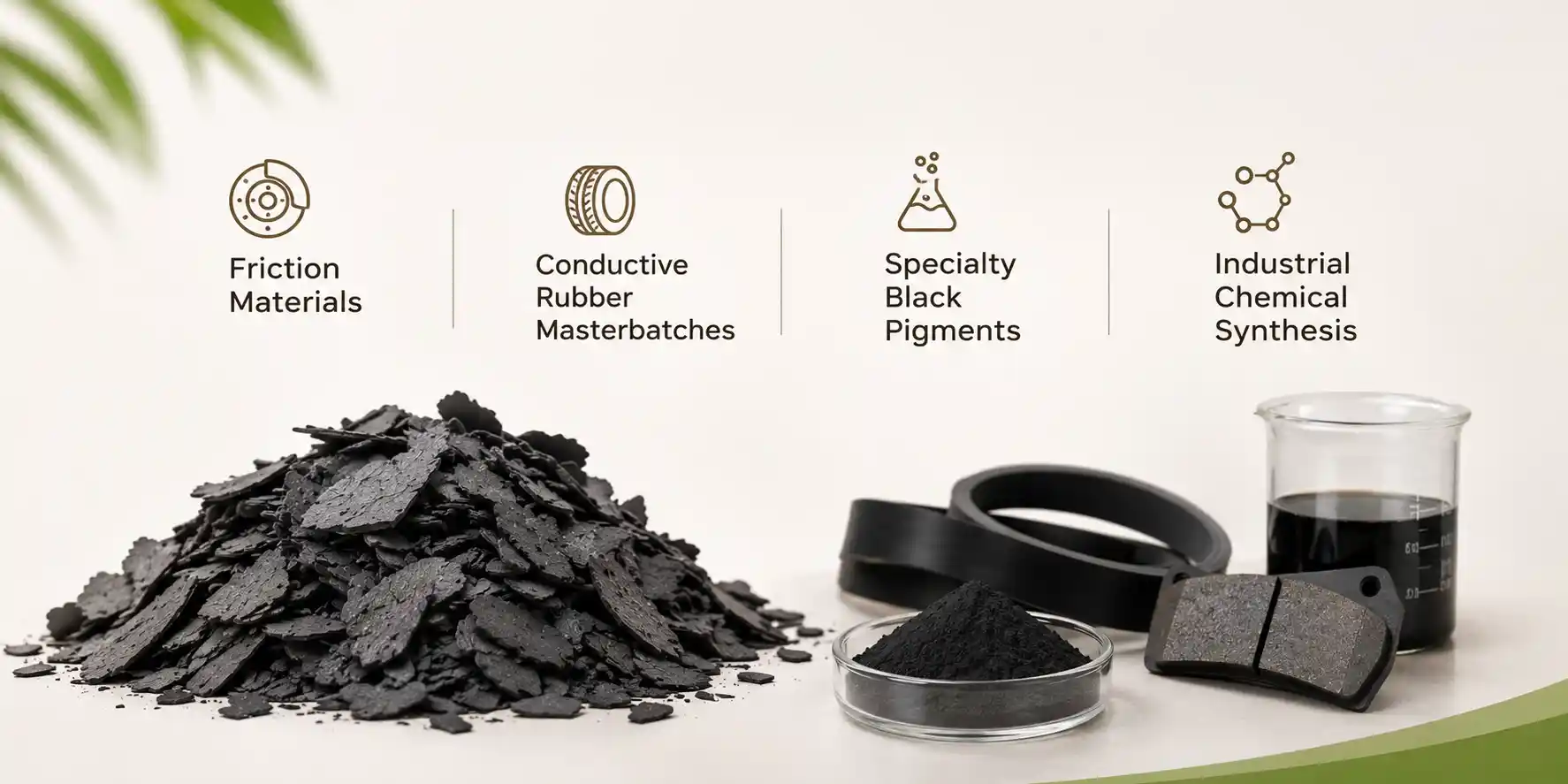
An essential raw carbon precursor for industrial compounders producing specialty black masterbatches, conductive rubber, and heavy-duty friction materials.

Because of its uniform carbon structure and low volatile impurities, finely ground coconut carbon is compounded into vehicle brake linings, automotive clutch pads, and conveyor belts to improve heat dissipation and wear resistance. It also provides deep, UV-stable natural black coloration for industrial plastics and protective coatings.

Rubber Compounding • Friction Lining • Black Pigments
03 // For Activated Carbon Factories

Direct Raw Material Supply For Activated Carbon Manufacturers

Are you an activated carbon manufacturer looking for consistent, high-yield feedstock? Mawai Carbon Industries directly produces and exports premium coconut shell charcoal carbonized specifically to meet the high standards of steam activation plants.

01

Natural Microporous Structure

Mature coconut shell has the tightest natural microscopic pore structure of any biomass. When exposed to steam at high temperatures, it opens millions of microscopic adsorption pores, allowing your factory to produce high-grade activated carbon for municipal water and air filtration with maximum efficiency.

02

Extreme Hardness & Higher Yield

Because coconut shells are naturally dense and hard, our charcoal does not crumble or turn into waste dust inside your rotary activation reactors. This high mechanical strength gives your plant significantly higher yields of valuable granular activated carbon.

03

Reliable Factory Supply

With manufacturing facilities in South India and Indonesia, Mawai produces over 100 metric tonnes daily. We supply activation plants worldwide with uniform batch quality, reliable container shipments, and direct factory pricing without middlemen.

Dry, screened charcoal pieces ready for direct steam activation
Moisture-proof container packaging for international shipping
Long-term supply contracts available for factories worldwide
04 // Proven Advantages

Benefits of Coconut Shell Charcoal

Why commercial buyers and industrial processors around the world prefer coconut shell charcoal over conventional coal and wood charcoal.

100% Renewable Raw Material

Made entirely from the discarded shells of coconuts harvested for food and oil. Coconut trees produce crops every season, making it a completely renewable resource that never depletes natural resources.

Smokeless & Odorless Burning

Because it contains zero wood resins or chemical additives, coconut charcoal burns clean without irritating black smoke, foul chemical odors, or sparking. Ideal for indoor ventilation and food preparation.

Longer Burning & Steady High Heat

The high natural density of mature coconut shells allows the charcoal to burn up to three times longer than ordinary wood charcoal, delivering sustained, uniform high heat for cooking and heating.

Extremely Low Residual Ash

Unlike wood charcoal or coal which leave behind heavy clinker and piles of messy ash, coconut charcoal burns down almost completely, leaving only a tiny amount of natural white ash that is easy to sweep.

Natural Hardness & Safe Transport

Coconut shell charcoal has high natural physical hardness. It does not break down or turn to fine dust when handled, stacked in warehouses, or shipped in containers across ocean routes, ensuring buyers receive solid, usable pieces upon delivery.

05 // Environmental Responsibility

Sustainability & Environmental Impact

Choosing coconut shell charcoal is an active step toward protecting our planet's forests and reducing industrial carbon footprints.

Forest Protection

Zero Deforestation • No Trees Cut Down

Traditional lump charcoal production is one of the leading drivers of deforestation and forest degradation across tropical regions. In sharp contrast, coconut shell charcoal requires cutting down zero trees. It utilizes only the hard shell that remains after coconuts are harvested naturally from existing palm plantations.

Protects natural forest ecosystems & wildlife habitats
Circular Economy

Upcycling Agricultural Waste Into Clean Energy

Millions of coconut shells are discarded every year as agricultural waste after harvesting. By collecting these shells and carbonizing them through clean processing facilities, Mawai converts discarded agricultural waste into valuable, clean energy and high-grade industrial raw materials, keeping waste out of landfills.

Closed-loop agricultural recycling • Zero waste to landfill
Climate Smart

Carbon-Neutral Biomass Cycle

Coconut palm trees absorb vast amounts of carbon dioxide from the atmosphere throughout their long lifespans. Using coconut shell charcoal releases only the carbon that the tree captured during its recent growth cycle, maintaining a clean, closed carbon cycle compared to burning fossil fuels.

Natural renewable cycle • Clean replacement for fossil coal
Community Impact

Supporting Rural Coconut Farming Families

Mawai sources coconut shells directly from local farming communities and smallholder coconut plantations across South India and Indonesia. This provides fair, direct income to agricultural families, turning coconut shells into an important economic asset for rural communities.

Direct farmer partnerships • Empowering rural livelihoods
Direct Manufacturer // Factory Export Supply

Looking For Direct Coconut Shell Charcoal Supply?

Whether you operate an activated carbon plant, manufacture barbecue briquettes, or require high-purity industrial carbon, Mawai Carbon Industries delivers reliable container shipments directly from our factories to your doorstep.

Direct Factory Production: South India • Indonesia100% Mature Coconut Shell Raw MaterialWorldwide Container Export Supply