
Coconut Shell Charcoal as High-Purity Biochar for Soil Regeneration & Sustainable Agriculture
How agricultural biochar produced from mature coconut shells restores depleted farmland soils, retains soil moisture by up to 30%, and sequesters biogenic carbon for centuries.

Mawai Agricultural Board
Agronomy & Biochar Researchers
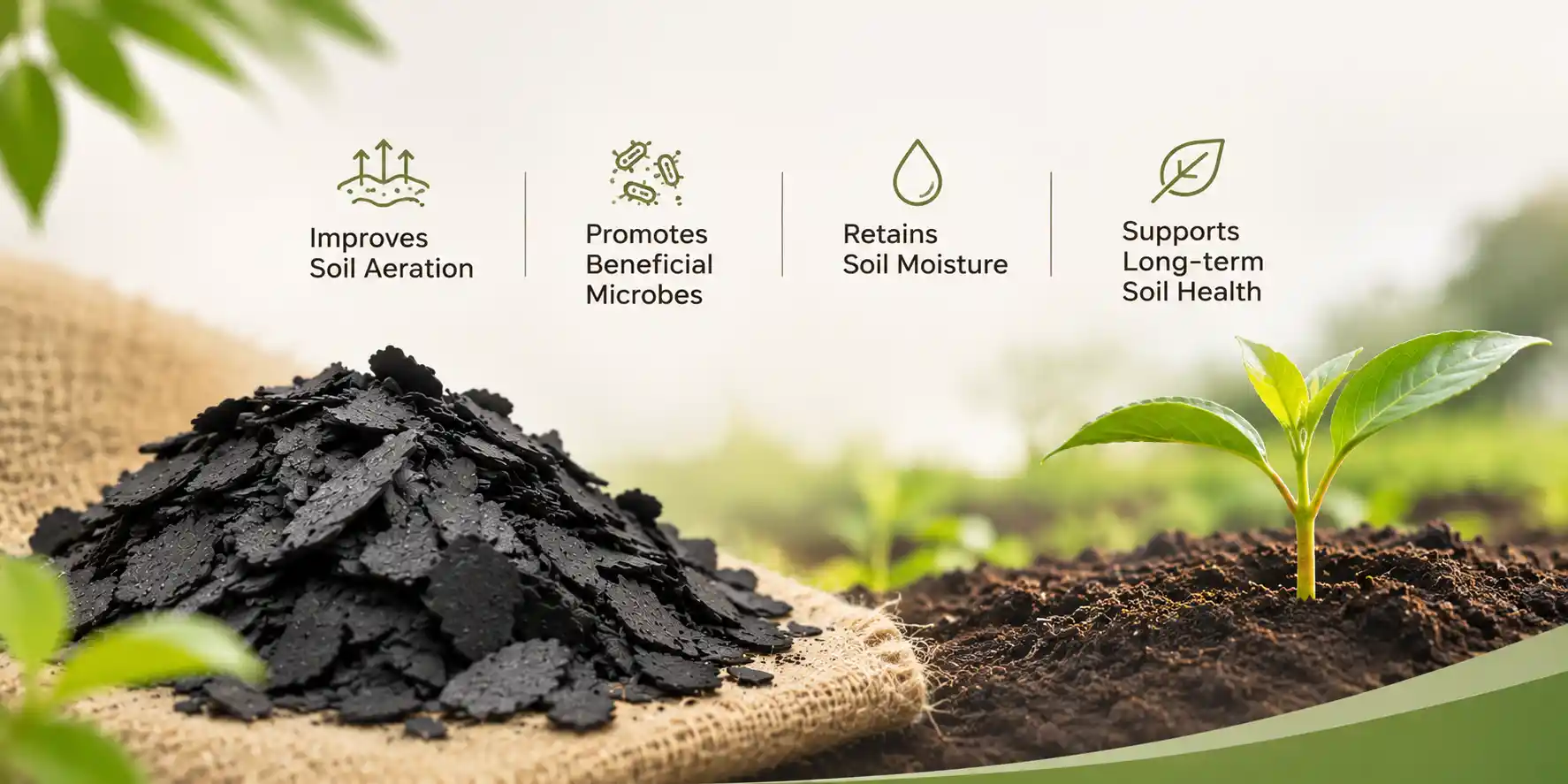 Visual Documentation // Agriculture & Biochar
Regenerating Agricultural Soils with Renewable Plant Carbon
Intensive industrial farming, synthetic chemical overuse, and climate-induced droughts have severely depleted organic topsoils worldwide. To reverse soil degradation, modern agronomy is increasingly turning to biochar—a stable, porous form of carbon produced from agricultural biomass through oxygen-deprived thermal conversion.
While biochar can be made from various plant wastes, coconut shell biochar provides distinct biological and physical advantages due to the exceptional cellular density of mature copra shells.
1. Massive Internal Surface Area as a Microbial Sanctuary
Coconut shell biochar possesses millions of microscopic internal pores that do not collapse under soil compaction. When integrated into the soil root zone:
- Microbial Habitat: The micro-honeycomb structure shelters beneficial bacteria and mycorrhizal fungi from predators and chemical shock.
- Nutrient Retention: High Cation Exchange Capacity (CEC) enables biochar to attract and hold plant nutrients (nitrogen, phosphorus, potassium), preventing expensive fertilizers from leaching into groundwater.
2. Water Retention in Drought-Prone Farmland
Sandy and degraded agricultural soils lose irrigation water rapidly through percolation. Coconut shell charcoal's capillary microporosity acts as a natural subsurface sponge, retaining up to 30% more moisture in the root zone. During dry periods, water is slowly released back to plant roots, significantly reducing required irrigation frequency and protecting crop yields.
3. Long-Term Carbon Sequestration (ESG & Carbon Credits)
When raw agricultural coconut shells decompose naturally in fields, their biogenic carbon returns to the atmosphere as greenhouse gases ($CO_2$ and $CH_4$) within months. Converting shells into high-purity charcoal locks that carbon into an inert, highly stable molecular lattice with >75% fixed carbon that remains in the soil for centuries.
This makes coconut shell biochar a certified carbon removal technology, helping agribusinesses and agricultural projects earn recognized carbon removal credits (CORCs).
Mawai Quality & Compliance Verified
Data verified against ASTM international testing standards and production batch analysis.
Related Technical Publications
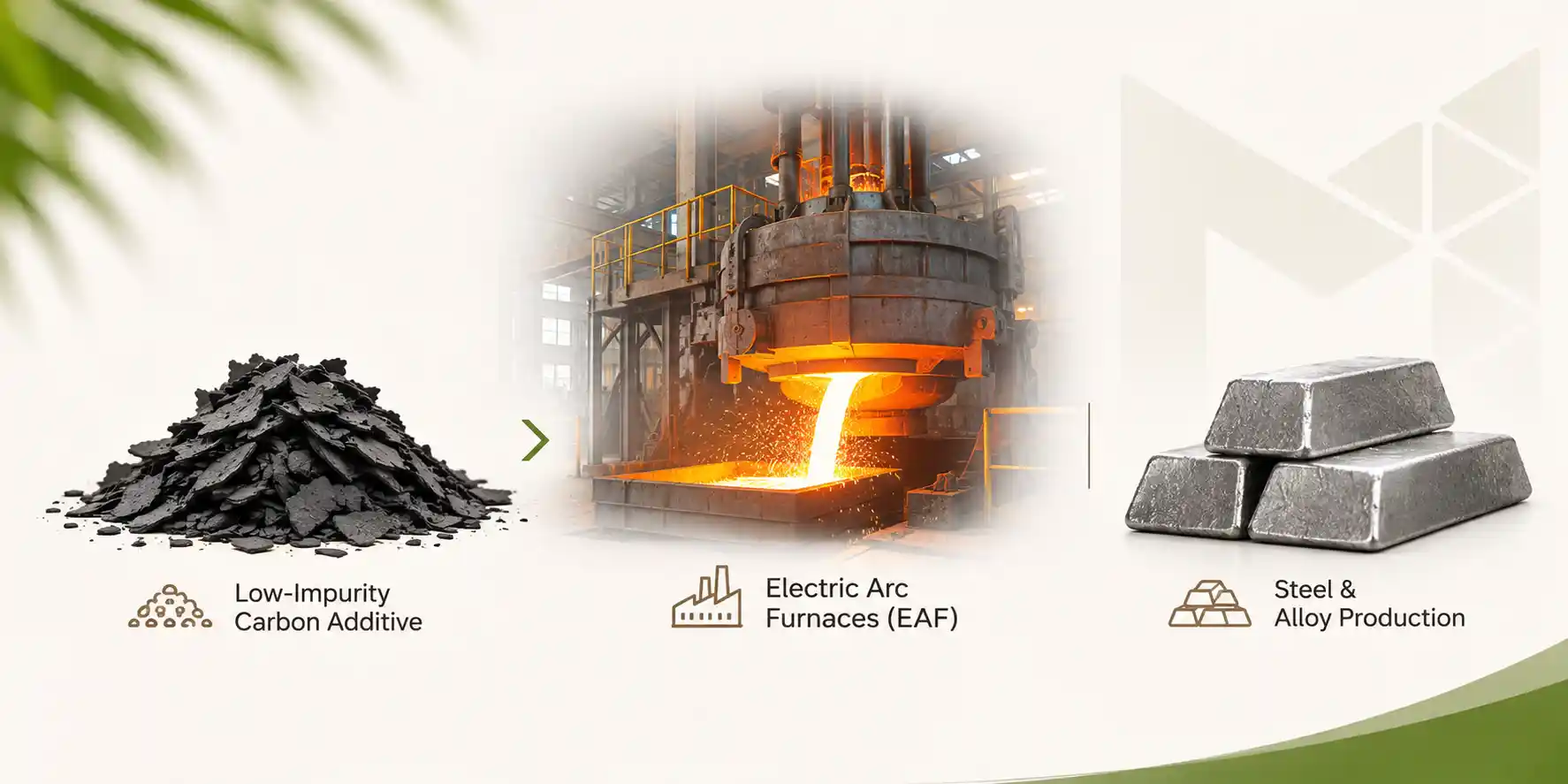
High Fixed Carbon Coconut Charcoal in Metallurgy & Steel Foundries: The Low-Impurity Recarburizer
Discover why electric arc furnace (EAF) operators and ductile iron foundries are replacing fossil coke with high-purity coconut shell charcoal to eliminate sulfur contamination and slag defects.

Why Coconut Shell Charcoal Briquettes Outperform Hardwood in Commercial BBQ & Shisha
Discover why commercial pitmasters, barbecue restaurants, and wholesale charcoal distributors choose coconut shell briquettes over lump hardwood for longer burn times and pure flavor.
Looking For A Direct Coconut Shell Charcoal Manufacturer?
Partner with Mawai Carbon Industries for reliable container-load supply of premium coconut shell charcoal, fine carbon powder, and industrial activated carbon grades delivered worldwide.